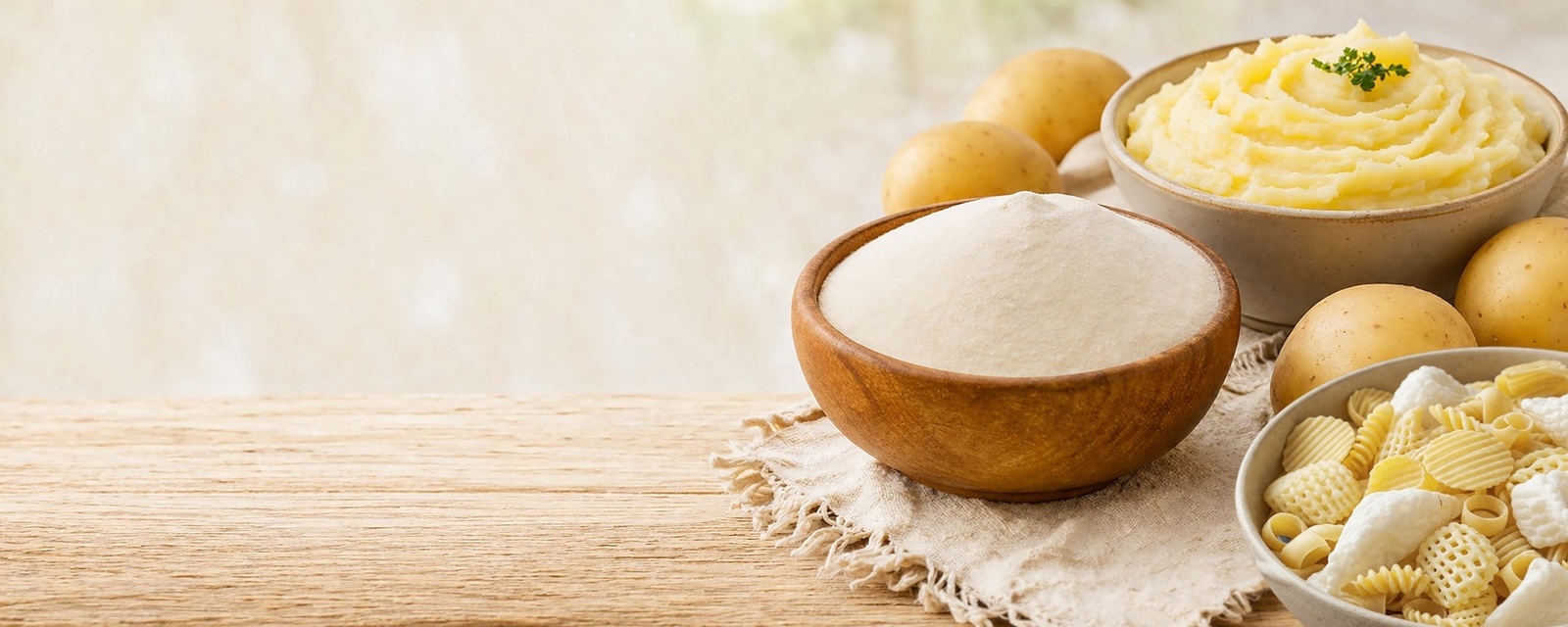
THE RIGHT TEXTURE FOR SNACKS.
THE RIGHT CONSISTENCY FOR INSTANT MASH.
Goodrich Potato Granules are produced through a specialized granulation process followed by controlled air drying, designed to preserve the integrity of whole potato cells. This differentiates them from drum-dried flakes and flour, resulting in a product with lower free starch, reduced stickiness, and superior handling characteristics.
functionality
Potato flour is available in different specifications, primarily categorized into two main types based on particle size.
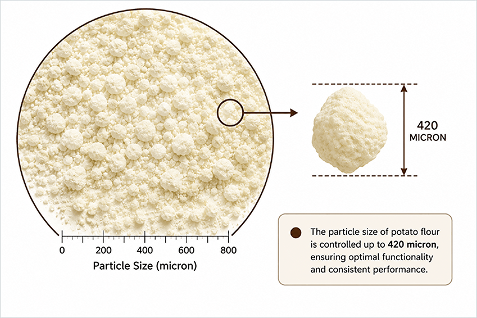
GRANULAR FLOUR
40 mesh (approximately 420 micron)
The selection depends on the intended application and processing requirements. Granular flour typically passes through a 40 mesh (approximately 420 micron) screen. Due to its relatively larger particle size, it retains more intact potato cells and exhibits moderate free starch with controlled functionality.

MAIN TYPES BASED ON
PARTICLE SIZE
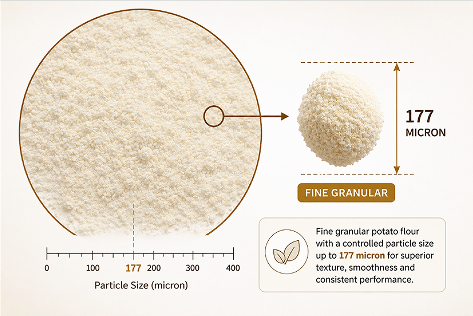
FINE FLOUR
80 mesh (approximately 177 micron)
Fine flour typically passes through an 80 mesh (approximately 177 micron) screen. This finer grade offers better dispersion and uniform mixing, making it suitable for dry premixes and applications requiring consistency.
Pack Sizes / Palletization
| Flakes | Granules | Slice | Dice | Shred | |
|---|---|---|---|---|---|
| Retail | Pouch / Carton |
Pouch / Carton |
Pouch / Carton |
Pouch / Carton |
Pouch / Carton |
| Foodservice | Pouch / #10 Carton |
Pouch / #10 Can / FS Carton |
Pouch | Pouch | Pouch |
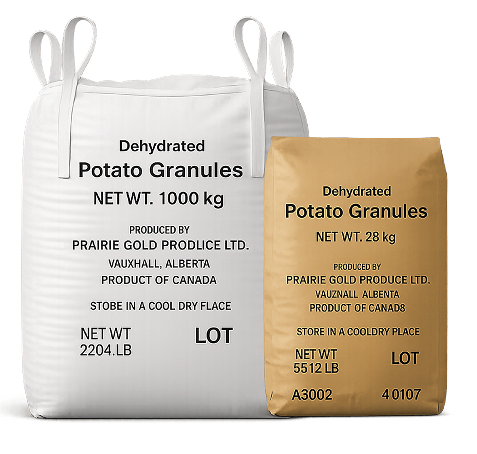
| Bulk | Kraft Bag / Jumbo Bag / Tote / Railcar |
Kraft Bag / Jumbo Bag / Tote / Railcar |
Kraft Bag / Jumbo Bag / Tote |
Kraft Bag / Jumbo Bag / Tote |
Kraft Bag / Jumbo Bag / Tote |
Shelf Life

Average life of 18 months from the date of manufacture when stored in cool, dry conditions (<30°C and <65% humidity) in the original packaging.

Shelf life can be extended up to 24 months upon request, depending on product formulation and packaging configuration.

Please refer to the specific product specification sheet, as ingredients and packaging formats may influence the final shelf life.
Additives/Ingredients:

Used as an emulsifier, these help control stickiness by interacting with free starch during processing. They also improve drum-drying efficiency and contribute to a smoother, more consistent texture in the rehydrated product.

Used to protect against non-enzymatic browning, helping preserve the natural appearance by minimizing reactions between amino acids and reducing sugars during processing.

Supports color stability by binding metallic ions, further reducing the risk of discoloration and maintaining product consistency.

Act as natural antioxidant systems, helping to protect color, freshness, and overall product stability during processing and storage.

Selected product variants may include added flavors (e.g., butter, garlic, cheese) and natural colors (e.g., turmeric-based) to meet specific foodservice and retail requirements.

Functions as a chelating agent, binding naturally occurring metallic ions to prevent oxidation. This helps maintain a stable and consistent product color.